
Private banks in India are aggressively mobilising Foreign Currency Non-Resident (Bank), or FCNR(B), deposits by raising interest rates and using website countdowns, as the Reserve Bank of India's swap window is set to close on August 31, earlier than initially planned.

Shares of major private lenders, including HDFC Bank, Axis Bank, and Kotak Mahindra Bank, experienced a sharp selloff after their June-quarter results indicated persistent pressure on net interest margins (NIMs), despite healthy credit growth. This decline overshadowed gains in ICICI Bank and Punjab National Bank (PNB), which reported resilient or stronger-than-expected earnings.

Indian benchmark equity indices extended their losing streak for a fourth consecutive day, with the Sensex tumbling 417 points due to rising crude oil prices and a significant sell-off in IT stocks, impacting overall investor sentiment.

Potential external candidates include Anup Bagchi, Rajiv Sabharwal and CSB Bank's Pralay Mondal.

Your credit card may have security controls you rarely use. Here are seven settings that can help prevent unwanted or fraudulent transactions.

Indian benchmark indices, Sensex and Nifty, closed lower on Wednesday, reversing early gains due to profit-taking and weakness in sectors like IT, FMCG, and consumer durables, despite support from lower crude oil prices.

Indian benchmark stock indices, Sensex and Nifty, extended their winning streak to a fourth day, with Nifty surging 1.60 per cent, driven by a sharp decline in crude oil prices and renewed foreign fund inflows.
Indian benchmark equity indices, Sensex and Nifty, closed lower due to persistent geopolitical tensions in the Middle East and elevated crude oil prices, with investors remaining cautious ahead of fresh US sanctions on Iran.

Indian benchmark indices, Sensex and Nifty, saw declines in early trade, with the ongoing US-Iran standoff cited as a major factor impacting investor sentiment and raising concerns about inflationary pressures and currency volatility for oil-importing nations like India. Track Sensex, Nifty on August 14, 2026.

The move comes amid growing demand from organisations in India for local access to Claude.

Indian benchmark indices, Sensex and Nifty, experienced declines in early trade due to a surge in crude oil prices and significant selling pressure on bank stocks, impacting overall investor sentiment. Track Sensex, Nifty on July 22.

Indian banks anticipate a reduction of up to 50 basis points in their funding costs due to a surge in liquidity from robust Foreign Currency Non-Resident (Bank), or FCNR (B), flows, lessening their reliance on more expensive certificates of deposit (CDs).

ICICI Bank has successfully raised $1 billion through a five-year senior unsecured US dollar bond, marking its first public dollar bond issuance since 2017 and the largest single-tranche US dollar bond issuance by an Indian issuer so far this year.
Indian benchmark indices Sensex and Nifty experienced declines in early trade, driven by a surge in Brent crude oil prices above USD 91 per barrel due to escalating tensions between Iran and the US, alongside an increase in US 10-year bond yields. Track Sensex, Nifty on August 18.

Indian stock markets this week will be primarily influenced by a series of corporate Q1 earnings, the evolving geopolitical situation in West Asia, and fluctuations in crude oil prices, according to market analysts.

Sources clarify that the NCLT's approval of a repayment plan for Essel Group founder Subhash Chandra does not signify a 99.97 per cent write-off of Rs 22,000 crore in bank loans, as the figure represents claims against him as a personal guarantor, not debt personally borrowed.

Indian benchmark equity indices, Sensex and Nifty, experienced declines in early trade due to a surge in Brent crude oil prices, which rose above USD 90 per barrel, coupled with subdued global cues and ongoing US-Iran skirmishes. Track Sensex, Nifty on Auigust 12.

'Resolution plan with this much haircut is totally unviable.'
Indian benchmark indices Sensex and Nifty experienced a significant tumble in early trade, primarily driven by heavy selling in HDFC Bank following its quarterly earnings and a sharp spike in Brent crude oil prices due to escalating tensions between the US and Iran. Track Sensex, Nifty
Indian benchmark indices Sensex and Nifty saw declines in early trade, influenced by elevated crude oil prices stemming from renewed geopolitical uncertainties, particularly concerns surrounding the Strait of Hormuz. Track Sensex, Nifty on August 11, 2026.

The Allahabad High Court has ruled that investigating agencies cannot impose a blanket debit freeze on a person's bank account during cybercrime investigations. The court stated that restraint must be proportionate to the suspected proceeds of crime, directing banks to de-freeze accounts beyond the disputed amount. This ruling aims to protect innocent account holders from complete financial deprivation due to minor disputed transactions.

Indian benchmark indices, Sensex and Nifty, saw a significant rebound in early trade, with the Sensex jumping 726 points and the Nifty climbing over 200 points, primarily driven by strong performances in IT stocks, HDFC Bank, and renewed foreign fund inflows. Track Sensex, Nifty on July 29.

Vivo T5 Lite 5G has made its debut with a feature-packed specification sheet aimed at budget-conscious buyers.
Axis Bank on Wednesday reported a 26 per cent decline in standalone net profit to Rs 5,089.64 crore annually for the quarter ended September 2025. The private sector lender posted a profit of Rs 6,917.57 crore for the July-September quarter in 2024-25.

Indian benchmark indices Sensex and Nifty saw a significant rebound in early trade, driven by softer-than-expected US inflation data which has reinforced expectations of a less aggressive monetary policy stance from the Federal Reserve, providing relief to global risk assets.
ICICI Bank, India's second-largest private-sector lender, is set to raise approximately $500 million through an overseas dollar bond issuance, marking its first such move in nearly a decade. This fundraising effort will utilise the Reserve Bank of India's (RBI) concessional swap window, a facility designed to reduce hedging costs for foreign currency borrowings.

Indian benchmark indices, Sensex and Nifty, saw early gains driven by lower crude oil prices and buying in Reliance Industries, even as the Reserve Bank of India maintained its benchmark policy rate for the fourth consecutive meeting, reinforcing confidence in the domestic economy.
Axis Bank reported a sharp drop in net profit in the second quarter of financial year 2026 (Q2FY26) on higher provisions and weak operating profit growth while revenue growth was moderate. But loan growth and deposit growth improved to double-digits year-on-year (Y-o-Y) and asset quality also improved with the gross non-performing loan or NPL ratio moving down.
Indian benchmark indices Sensex and Nifty extended their losses for the fourth consecutive session, with the Sensex declining 363.66 points and the Nifty dipping 126.65 points, primarily due to a sharp jump in Brent crude oil prices to USD 98.32 per barrel amid escalating tensions in West Asia.

The Acer Aspire 3 (2026) is now available in India through Flipkart in 11.6-inch and 15.6-inch display variants.

Indian benchmark indices Sensex and Nifty experienced a downturn in early trade, primarily influenced by a dip in HDFC Bank shares, persistent outflows from foreign funds, and escalating geopolitical tensions between the US and Iran. Track Sensex, Nifty performance.

Motorola has expanded its G-series lineup in India with the launch of the Moto G77 Power, a smartphone designed for users who prioritise battery life and reliable everyday performance.

The incident involved compromise of an employee's email account, resulting in unauthorised access to certain data.
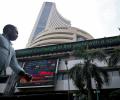
Indian benchmark indices, Sensex and Nifty, saw early gains, primarily driven by IT stocks, amidst expectations of a less aggressive monetary policy from the US Federal Reserve following softer inflation data. Global market trends and upcoming Q1 results are also influencing investor sentiment. Track Sensex, Nifty on july 16.

Indian benchmark indices Sensex and Nifty continued their upward trend for a second consecutive day, with the Sensex gaining over 800 points, driven by strong performances from heavyweights like Reliance Industries, ICICI Bank, and HDFC Bank, alongside positive cues from easing crude oil prices and robust IT sector earnings.
Indian stock markets witnessed a significant rally, with the Sensex climbing 964.58 points and the Nifty reaching 24,330, driven by strong buying in blue-chip stocks, particularly in the IT and banking sectors, amidst optimism over Q1 earnings and a shift towards large-cap investments.
Indian benchmark equity indices, Sensex and Nifty, saw early gains driven by strong buying in blue-chip bank stocks, fresh foreign fund inflows, and a decline in global crude oil prices, boosting investor confidence.

Indian benchmark indices, Sensex and Nifty, experienced a decline in early trade due to uncertainty surrounding the upcoming US-Iran negotiations in Doha. Foreign fund outflows and a dip in major IT stocks further contributed to the market's cautious sentiment, despite mixed performance in global markets.

Indian benchmark indices, Sensex and Nifty, staged a moderate rebound after a significant correction in the previous session, driven by foreign fund inflows and a largely positive trend in global markets, though geopolitical tensions between the US and Iran continued to foster caution.

Indian benchmark indices, Sensex and Nifty, experienced subdued trading and turned flat on Tuesday as investors engaged in profit-booking following a recent rally, compounded by weak Asian market trends and fresh foreign fund outflows.
